How Curiosity Led Me from Civil Engineering to Bitcoin Open Source Contribution
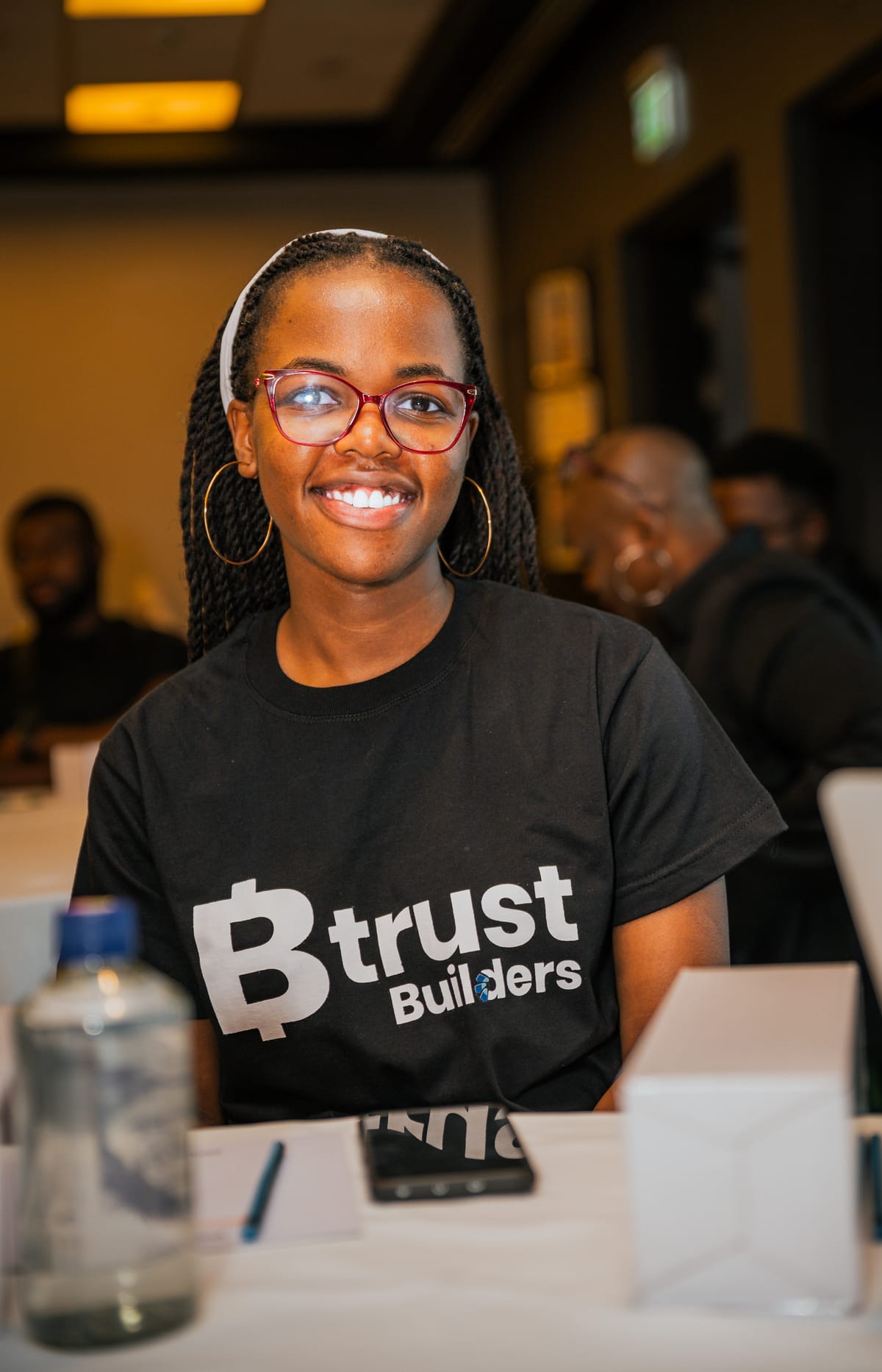
Written by Jemimah Nagasha
If you had told me a few years ago that I would leave my civil engineering job to work full-time in Bitcoin open source, I probably would have smiled politely and gone back to reviewing construction drawings.
At the time, my life followed a fairly structured path. I was a civil engineer managing public infrastructure and maintenance projects. But on the side, I had started exploring technology.
I picked up frontend development as a side hustle, partly because I wanted more flexibility, and partly because I enjoyed building things that people could actually use and interact with.
But even then, something felt incomplete. I wasn’t just interested in writing code. I wanted to understand systems, how they work, how they scale, how they fail, and most importantly, how they can give people more freedom and control. That curiosity is what eventually led me to Bitcoin.
The First Spark
My real entry point into Bitcoin was a conversation. A friend invited me to the very first BitDevs Kampala event. I didn’t fully know what to expect, but I decided to show up anyway.
That room changed everything for me. For the first time, I saw Bitcoin not as speculation, hype, or headlines, but as a technical system. A system that people were actively building, questioning, improving, and defending.
Even more importantly, I met people who deeply cared about the idea of freedom money and permissionless systems. There was something powerful about being in a room with people who were not just talking about Bitcoin, but working to understand it and contribute to it.
At that same event, I heard about the Btrust Builders Program from an alumnus, Rukundo. He described it as a structured, rigorous, and community-driven pathway into Bitcoin open-source development.
It sounded exactly like the kind of opportunity I had been looking for so I applied.
The Btrust Builders Program
When I got accepted into Btrust Builders, I was so excited. The first six weeks focused on understanding the foundations of Bitcoin: how it works, why it exists, and the principles behind it. We learned about Bitcoin as a monetary system, a technical system, and a tool for individual freedom.
This phase was highly engaging, especially because of the weekly collaborative calls with other participants. We shared what we were learning, asked questions, and worked through difficult concepts together.
During that time, I began to understand Bitcoin’s broader mission more clearly. It is not just about technology for technology’s sake. It is about addressing real problems in traditional money systems and giving people more control over their financial lives. Coming from a context where financial systems do not always work in people’s favour, that idea felt very real to me.
After the initial phase, I was accepted into the Btrust Builders Fellowship, where we went much deeper into the technical side of Bitcoin.
We wrote programs to decode transactions, created Lightning channels, worked on group projects to build Bitcoin applications, and also explored existing Bitcoin open-source projects and the problems they were trying to solve. It was intense, demanding, and exactly the kind of structure my curiosity had been missing.
The fellowship also changed the way I approached learning. I became more comfortable with not knowing everything right away. I learned how to read code I didn’t fully understand yet. I learned how to ask better questions. And slowly, I gained both the technical foundation and the confidence to start contributing to open source.
From Learning to Contributing
Because of the fellowship, I started contributing to Polar, a tool that makes it easier for developers to run Bitcoin and Lightning nodes locally. It was the perfect entry point for me because it's practical, useful, and directly connected to improving the developer experience.
My first pull request was a huge learning experience. It was exciting, but also humbling. I had to read the codebase, understand the contribution process, ask questions, make changes, and respond to feedback. But each contribution made the next one a little easier.
Over time, the codebase started to feel less foreign. It became something I could understand, work with, and eventually help shape.
Around the same time, I became more involved in the local Bitcoin community. What started as attending BitDevs Kampala slowly turned into helping organise it, and eventually leading it in 2025.
I also joined the Btrust Builders faculty, where I got the chance to share what I had learned with future cohorts. That experience meant a lot to me because it felt like I was passing the knowledge forward and helping create the same kind of supportive path that had helped me.
Through all of this, I met like-minded people, learned from their experiences, and realised that I was not alone in this journey.
Building a space where developers could learn together, whether they were completely new or already experienced, reinforced something I now believe deeply: Education and open source are closely connected. In many ways, they are part of the same work.
The Btrust Starter Grant
All of this was happening while I was still working full-time as a civil engineer. Balancing both worlds was one of the hardest things I have done. There were lots of late nights, early mornings, and weekends spent writing code after long workdays. I loved what I was learning and building, but it was not easy to keep both paths going at the same time.
Then I applied for the Btrust Starter Grant to work on Polar, and in April 2026, I was awarded the grant. That moment meant a lot to me because it gave me the opportunity to transition into full-time Bitcoin open-source development. I no longer had to squeeze contributions into evenings and weekends, nor wait until after work hours to focus on the thing I cared about deeply. I could finally give it my full attention.
Building the Future I Care About
Today, I work full-time on Bitcoin open source, focusing on improving the developer experience, making it easier for others to build, test, and experiment with Bitcoin and the Lightning Network.
This journey wasn't linear, nor was it planned. It was a series of small decisions: showing up to one event, applying to one program, making one contribution, and saying yes to one opportunity. Each step built on the last, but none of them felt obvious or inevitable at the time.
This journey has given me more than technical skills. It has given me a community, a sense of purpose, and the chance to build tools that make Bitcoin more accessible.
I hope sharing my story motivates more people, especially those who, like me, didn't start in traditional computer science paths. You don't need to have it all figured out. What you need is curiosity, consistency, and a willingness to learn.
Bitcoin has room for people from many backgrounds, each bringing their own skills and perspective. That is part of what makes it stronger and more resilient.